Posts

Showing posts with the label Research

HAGIOGRAPHY: Miracles, Evidence, and Belief.

Image
Four important perspectives on the theology of miracles - Augustine of Hippo, Caesarius of Heisterbach, Thomas Aquinas, and Fredericus Mercurius (known in vernacular literature as Freddie Mercury) In the 1989 single ‘The Miracle’ from the album of the same name, Freddie Mercury, lead singer of the legendary rock band Queen sings - “Every drop of rain that falls In Sahara Desert says it all It's a miracle All God's creations great and small The Golden Gate and the Taj Mahal That's a miracle…” - Queen, The Miracle . While there’s no precise record of his taste in music, it is a sentiment that Augustine of Hippo could quite possibly have approved of.  As Benedicta Ward explains in Miracles and the Medieval Mind for Augustine the only miracle was the miracle of Creation – in that it was a revelation of the mysterious creative power of God (Ward, p. 3).  Natural everyday occurrences from rainfall to child birth were all miracles contained within this singular miracle...
ASK JUDE: “Jude – why do you always say the British Isles?”

Image
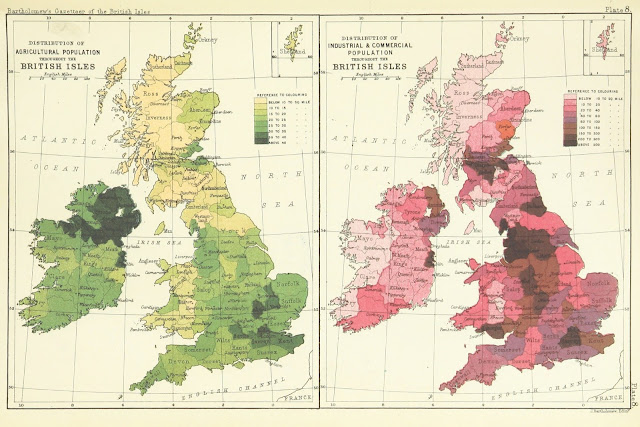
C.W.: Contains references to UK Politics, Brexit, and one reference to murder. Less Serious C.W: Contains references to Eurovision. TL/DR Included at the bottom of the post. I have been asked this question a few times by fellow researchers, and by other students, so I thought I would write a short explanation of why I am particularly given to multiple descriptions of th is type and why when I am setting out the geographic boundaries of a study I try to avoid using the names of specific countries – instead referring to the physical geography of the area. British Library digitised image from page 947 of "Gazetteer of the British Isles, statistical and topographical. Edited by J. Bartholomew. With appendices and special maps and plans" When the Eurovision Song Contest introduced telephone voting, a number of people – many in a unique subset who were both fans of Eurovision and of statistics – noted that while some traditional back and forth awarding of po...

PUBLICATIONS: New Blog Post over at the Wellcome Collection

Image
I have written a new blog post for the Wellcome Collection on the use of guide dogs by blind people in the Middle Ages.  You can find it here . 

JUDE'S MUSINGS: Rethinking University

This entry is intended as a summary of points I’ve been thinking about regarding the university system and the problems we are currently facing.   The Covid-19 (SARS Cov-2) Pandemic of 2019-20 has revealed the fault lines of academia in the UK.  Talk of mass severance of academic jobs, pay cuts, mergers, and other measures has been rife.  Is there a way to fix this system?  I’ve been thinking about this for over a year now and I have a few thoughts which might help build a better system. 1) For the government to increase the research budget and education funding generally to where it should be.  This would remove the need for tuition fees and remove the ‘business’ model which universities have been forced to follow.   University Education in all subject areas is after all a public good which benefits both society and the economy as a whole. 2) Change university admissions.  Cap student numbers – to reduce the pressure on academics to...

ARCHÆOLOGY: Biological Sex, Human Bones: A few thoughts.

Image
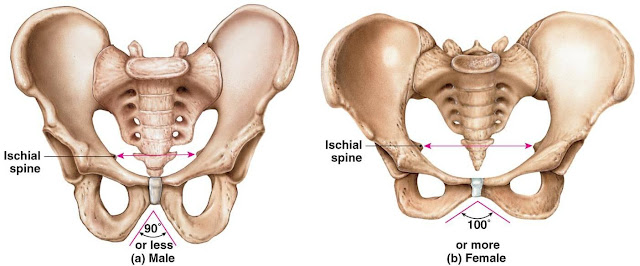
This post summarises a thread I wrote on twitter in response to a tweet from Erik Wade regarding the assignment of biological sex to human remains.  Erik’s thread contains a number of incorrect assumptions both about how archaeological assignment of biological sex works, and about how these results are interpreted.  Also through use of particular terms it conflates a number of distinct issues.  This 8 point summary contains a couple of corrections for minor errors which crept in due to the problems of using speech-to-text software.  Speech to text software can’t always negotiate accents very well and in my case it often corrects ‘sex’ to ‘six / cepts / sepsis’ – which means I usually use gender as a placeholder and then correct by hand – occasionally I miss the odd one and it causes unintentional confusion.  I’ve also included a brief summary of some additional points made due to a dialogue with one particular individual.  All these points are within the bo...

OBSCURE SAINTS - St Herbert of Derwentwater

Image
A lesser known saint of the British Isles, St Herbert’s story - at least what we know of it - is an interesting sketch of the lesser recorded, isolated monasticism of some early medieval Christians.  Like many saints the name most attached to this particular Herbert is not the place of his origin.  In fact, his origin is unknown, with even Bede, the most reliable historian who wrote of him, being vague about the details of his early life.  Indeed, in Bede’s Ecclesiastical History, where he is named as Herebert, and according to most translations is described as a ‘hermit’ but not as a monk, he appears only once.  The details of his calling or his life before his self-exile are scarce indeed.  What is emphasized in its stead is the strong spiritual fellowship he had with St Cuthbert.  The passage in Bede is one in which Cuthbert predicts his own death to Herebert.  It is from Bede’s narration of this passage that we get the minimal detail we have...

HISTORY OF MEDICINE / ARCHÆOLOGY: A Question of Ethics and the History of Medicine

This entry is written in response to a question from a student. As a historian one of my research specialisms is in the history of medicine and one of my other research foci is the archaeology of disease and palaeopathology. As such a major part of my research has involved the physical evidence of human existence and interaction with disease - bones. Human remains. And as such there are several highly important ethical considerations in relation to my research. I’ve decided to set out, broadly, the system of ethics I use when it comes to both teaching, writing, studying and also in dealing with a wider audience - both in terms of non-specialists and the general public. I hope that this exposition may prove useful as an, albeit brief, summary of what might be considered good ethical practice. There has bene extensive debate over the display of human remains in the context of museums - given all the associated ethical questions, and the legacy of racism and colonialism with which, ...