Posts

POPULAR HISTORY: Witchcraft, and Salem-sationalism.
Image
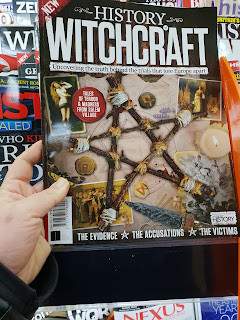
While perusing the magazine racks in my local branch of WHSmith’s, my eyes fell on one title and I let out an inward groan of academic despair. I have to admit I have something of a love hate relationship with popular history magazines. Some are reasonably good, others are terrible. Some are only interesting for the farcical nature of the ‘history’ contained within. The title which drew my attention however, was one which might be considered both ridiculous and at the same time both irresponsible and dangerous. The title, produced by the same imprint which publishes All About History (a title which itself frequently retreads inaccuracies from simplified school history texts), was “History of Witchcraft”. The subtitle makes the bold statement that it “Uncovers the truth behind the trials that tore Europe apart”. As anyone with even a casual scholarly interest in witchcraft or magic is no doubt aware this is a distinctly bold and factually inaccurate claim. Even with this beginning sta...

STUDENT MENTAL HEALTH : What Not To Do

At times it feels like every few weeks there is another headline relating to a fresh tragedy. Another case where a student has died from suicide. There are dozens of factors which have led to an increase in pressure on students at university – many are political in nature and the purpose of this post is not to make a political statement but rather to highlight the issue and to point to where, almost as a matter of routine, decisions were taken which could have led to another tragedy. This post tells the story of something which happened at a relatively high-profile institution within the UK. Some details have been deliberately framed in such a way as to maintain the anonymity of the student at the heart of it – the story is shared with their permission on the condition they remain anonymous. This story is an example of Bad Practice. It is a How Not To Do Student Support.

HISTORY OF MEDICINE / ARCHÆOLOGY: A Question of Ethics and the History of Medicine

This entry is written in response to a question from a student. As a historian one of my research specialisms is in the history of medicine and one of my other research foci is the archaeology of disease and palaeopathology. As such a major part of my research has involved the physical evidence of human existence and interaction with disease - bones. Human remains. And as such there are several highly important ethical considerations in relation to my research. I’ve decided to set out, broadly, the system of ethics I use when it comes to both teaching, writing, studying and also in dealing with a wider audience - both in terms of non-specialists and the general public. I hope that this exposition may prove useful as an, albeit brief, summary of what might be considered good ethical practice. There has bene extensive debate over the display of human remains in the context of museums - given all the associated ethical questions, and the legacy of racism and colonialism with which, ...

PERSONAL: 2018 Review.

It's almost the time of year where people start writing reviews of the year so I thought I'd get slightly ahead of the game and present a very quick round up of 2018.   The Lows There are a few that I won’t detail for personal reasons – this year has been a tough one, and I’m still processing a lot of the things that have happened.   However, a short summary of the lows : -           Spending vast amounts of time hunting highly specific paperwork. -           The DLA-PIP transfer.   I’m not going to call it Kafkaesque.   It’s worse than that. -           Getting barged out of the way while attempting to get to a train, causing me to miss the train and a talk I was excited about hearing. -           While it could have been worse dealing with the worst case of student mental...

PERSONAL: So, Why Did You Choose Medieval Studies? - Music and Lyrics

Image
While the first record (yes, actual vinyl thing) I bought was Iron Maiden’s Run to the Hills, the first album I ever listened to from end to end without any breaks was Clannad: Legend – also known as the soundtrack to Robin of Sherwood.   The second album was also by Clannad, Macalla (Gaelic for Echoes).    The themes in Clannad’s music, the sense of place, of past and present spoke to me in a way that, at that point, few things really had.   It seemed to bring places alive.   I’d often find myself wandering through places, thinking about all the people who had wandered that way before, what they looked like, how they felt.   Wandering around old churches (pretty easy when you’re a Clergy child – more on that in other entries), I’d find myself wondering about the lives of all the people who had done the same.   The music seemed to do the same thing.   The song which probably summed it up best was the song Poison Glen, also by Clannad...

ROMA HISTORY AND CULTURE: Exit, Pursued By A Bear (A Hypothesis)

At the IMC Leeds 2018 the traditional session on medieval animals turned to the topic of bears.  Much was made of their significance of bears in the cultures of northern European nations.  Little was remarked upon of the existence of bears in the Central Eastern Europe and parts of the Middle East – primarily the Syrian Brown Bear ( Ursus Arctos Syriacus ).  In response to a question stemming from her paper Irina Metzler remarked on the legal restrictions which were placed on people described as ‘those who keep bears’ – with the implication that this speaks to individual people rather than a particular group of people.  I would suggest an alternative possibility, which may stem from a confusion over a single term – Ursari.

PERSONAL: So, why did you choose Medieval Studies? Part 1: Choosing Your Own Adventure

Image
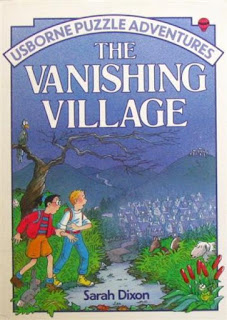
Recently someone asked me the question 'So, what made you choose Medieval Studies?'. After a few moments thought I said non-noncommittally that there were a lot of reasons.  It got me thinking about the things which inspired me to make that choice, and what continues to inspire me in my research.  It led to a few surprising reflections.  And while it didn't start there one of the first physical objects that led me to this field of research was a rather battered book from a very underfunded school library.