Posts

Showing posts with the label Medieval History

MANUSCRIPTS - The Book of Kells

Image
  GOSPEL BOOKS: The Book of Kells Latin: Codex Cenannensis Irish: Leabhar Cheanannais ; MS ID: Dublin, Trinity College Library, MS A. I The Book of Kells is probably one of the most recognisable early medieval manuscripts from the British Isles (For why I use the term British Isles generally see here ).   It was created at the Columban monastery somewhere in either Ireland, Scotland, or England.   The manuscript consists of 340 folios bound into four volumes with a combined page count of 680.   The text is written using iron gall ink, with the vibrant colours were made up of a variety of mixtures, with some of the ingredients for the pigment having been imported.   Created at the very beginning of the ninth century, it came to the monastery at Kells, and is now held by Trinity College Dublin, where any two of the four volumes are on display at any one time. The text contains the four Canonical Gospels of Matthew, Mark, Luke, and John, along with additi...

HAGIOGRAPHY: Miracles, Evidence, and Belief.

Image
Four important perspectives on the theology of miracles - Augustine of Hippo, Caesarius of Heisterbach, Thomas Aquinas, and Fredericus Mercurius (known in vernacular literature as Freddie Mercury) In the 1989 single ‘The Miracle’ from the album of the same name, Freddie Mercury, lead singer of the legendary rock band Queen sings - “Every drop of rain that falls In Sahara Desert says it all It's a miracle All God's creations great and small The Golden Gate and the Taj Mahal That's a miracle…” - Queen, The Miracle . While there’s no precise record of his taste in music, it is a sentiment that Augustine of Hippo could quite possibly have approved of.  As Benedicta Ward explains in Miracles and the Medieval Mind for Augustine the only miracle was the miracle of Creation – in that it was a revelation of the mysterious creative power of God (Ward, p. 3).  Natural everyday occurrences from rainfall to child birth were all miracles contained within this singular miracle...

OBSCURE SAINTS - St Eskil

Image
How did an 'Anglo-Saxon' monk become a venerated figure is a province in Sweden?  The answer is the story of St Eskil.   ( I have placed an explanation for my use of the term Anglo-Saxon at the end of this post.  It is used here due to the fact that St Eskil was recorded in Swedist hagiography of the time as being Anglo-Saxon and his origin played a significant part in the narrative which arose around him)   Painting in Överselö Church in Sweden, depicting the saint Eskil, with his attributes, Source Born in England, St Eskil is one of a number of missionary saints of Anglo-Saxon origin sent into Scandinavia – and one of a number associated with St Sigfrid (Sigfrid of Sweden).  Like many saints associated with evangelical missions into Scandinavia the exact dates of St Eskil’s life – we can gain approximations from some events detailed in later hagiography, but beyond that certainty is illusive.  We know that St Sigfrid was probably ...

OBSCURE SAINTS - St Kevin

Image
MS Royal 13 B VIII , Gerald of Wales' Topographia Hiberniae, England, c.1196-c.1223 The website TV Tropes is one which, like Wikipedia, is easy to venture into, and then find yourself going down a metaphorical rabbit hole.   One of its features is that each trope often has a name drawn from one of   the works which has used it . One trope is Aerith and Bob – the usage of very common-sounding names amongst more fantastical ones – which creates a sense of dissonance.   Even when justified by the story line (such as a character from the 20 th century being catapulted into a pseudo-medieval fantasy world) if creates a certain degree of dissonance.   It is worth noting that the definition excludes those cases where this is deliberate or a translation convention in the manner of Tolkien's use of different historical languages for different culture.   When reading down a list of medieval saints the appearance of Saint Kevin might produce the same eff...

PUBLICATIONS: New Blog Post over at the Wellcome Collection

Image
I have written a new blog post for the Wellcome Collection on the use of guide dogs by blind people in the Middle Ages.  You can find it here . 

HISTORY OF MEDICINE: A Plague of Confusion

Image
This article has been slightly expanded upon to provide clarification for those unfamiliar with the epidemiology of the three plague pandemics - which resulted from different strains of the same bacterium.  A few additional edits have been made for the avoidance of confusion by non-specialists in palaeopathology and the archaeology of disease, and to update the article in line with what is currently known about the recent cases in China. It was around 2:00 am when my attention was drawn to a video put out by Bloomberg Tiktok – produced by Matthew Albani and shown below.  The video is a response to news of  cases of 'plague' in China in recent weeks. Is the plague making a comeback?  pic.twitter.com/Hj6DdltGEf — Bloomberg TicToc (@TicToc)  November 20, 2019 Because it was 2:00 am I couldn’t express my initial response out loud without waking my neighbours.    Another video replete with misunderstandings, conflations, and a tone in li...

ARCHÆOLOGY: Biological Sex, Human Bones: A few thoughts.

Image
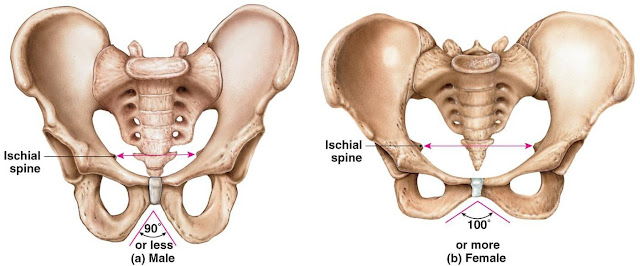
This post summarises a thread I wrote on twitter in response to a tweet from Erik Wade regarding the assignment of biological sex to human remains.  Erik’s thread contains a number of incorrect assumptions both about how archaeological assignment of biological sex works, and about how these results are interpreted.  Also through use of particular terms it conflates a number of distinct issues.  This 8 point summary contains a couple of corrections for minor errors which crept in due to the problems of using speech-to-text software.  Speech to text software can’t always negotiate accents very well and in my case it often corrects ‘sex’ to ‘six / cepts / sepsis’ – which means I usually use gender as a placeholder and then correct by hand – occasionally I miss the odd one and it causes unintentional confusion.  I’ve also included a brief summary of some additional points made due to a dialogue with one particular individual.  All these points are within the bo...

OBSCURE SAINTS - St Herbert of Derwentwater

Image
A lesser known saint of the British Isles, St Herbert’s story - at least what we know of it - is an interesting sketch of the lesser recorded, isolated monasticism of some early medieval Christians.  Like many saints the name most attached to this particular Herbert is not the place of his origin.  In fact, his origin is unknown, with even Bede, the most reliable historian who wrote of him, being vague about the details of his early life.  Indeed, in Bede’s Ecclesiastical History, where he is named as Herebert, and according to most translations is described as a ‘hermit’ but not as a monk, he appears only once.  The details of his calling or his life before his self-exile are scarce indeed.  What is emphasized in its stead is the strong spiritual fellowship he had with St Cuthbert.  The passage in Bede is one in which Cuthbert predicts his own death to Herebert.  It is from Bede’s narration of this passage that we get the minimal detail we have...